

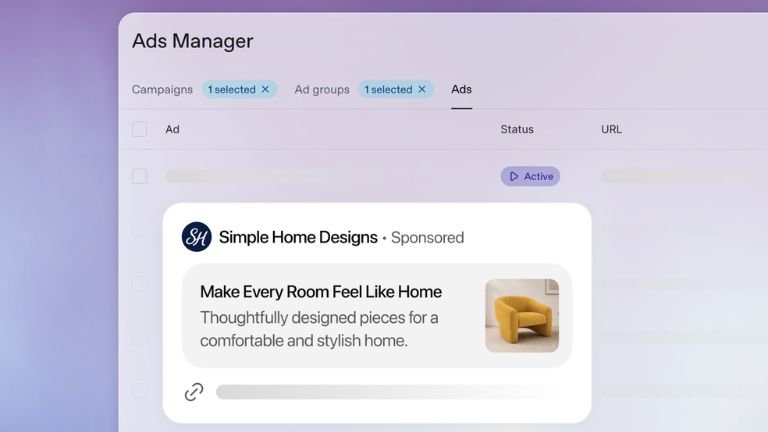
OpenAI appears to be testing a new ChatGPT Ads Manager interface, giving advertisers an early look at what could become a much more advanced and scalable advertising platform.
Several marketers have shared screenshots and feedback from the new interface, suggesting OpenAI is moving beyond basic ad experiments and toward a self-serve system with more hands-on campaign management.
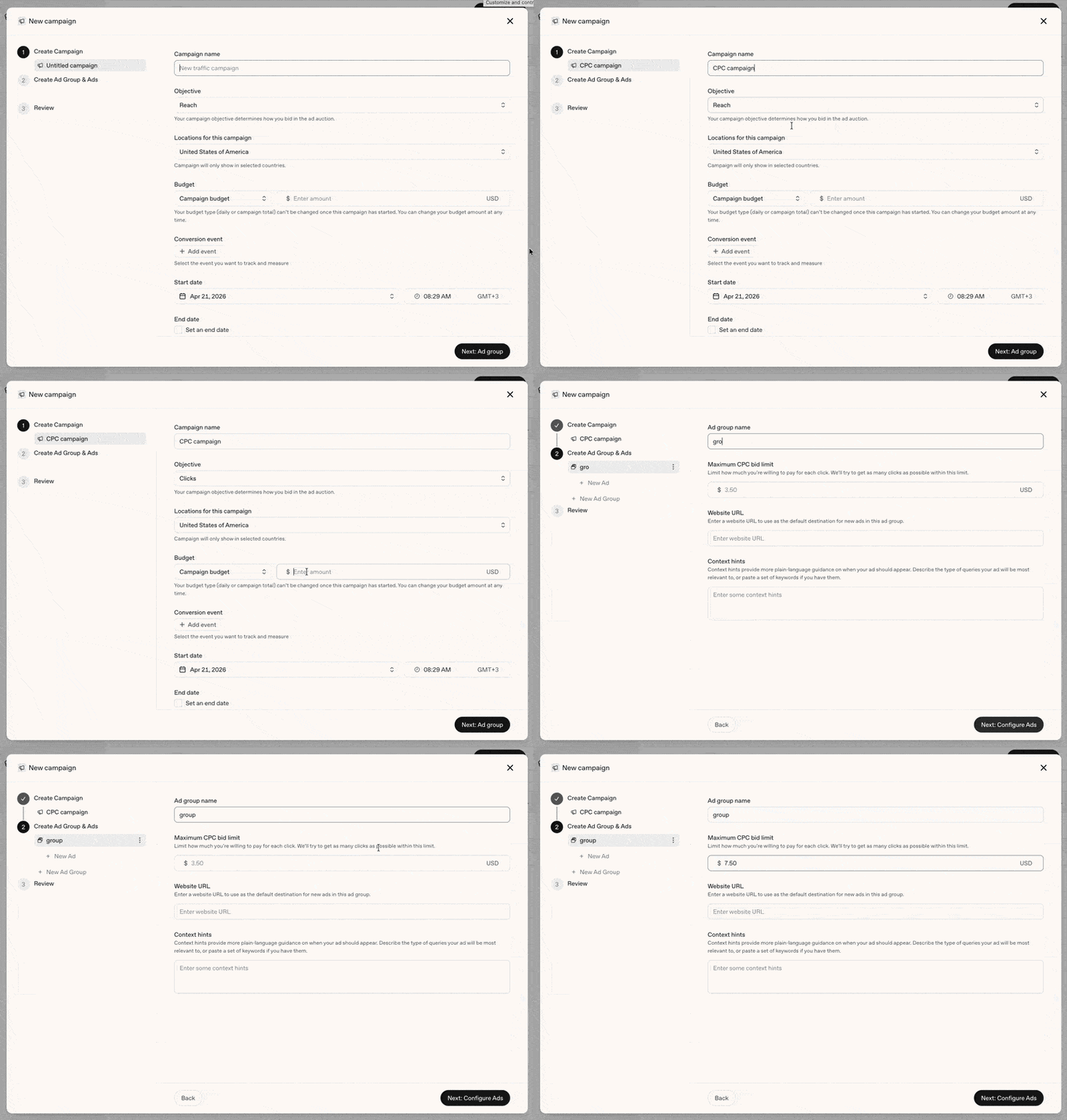


What’s changing
The biggest update is the introduction of a dedicated Ads Manager dashboard. Based on the screenshots shared by digital marketers Juozas Kaziukėnas and Glenn Gabe, advertisers may soon be able to launch, monitor, and optimize campaigns directly inside ChatGPT in real time.
That is a significant shift from the current setup, where reporting and campaign controls have reportedly been limited. Some early advertisers have said they were relying on simple weekly CSV reports rather than live performance dashboards.
A more interactive platform would bring ChatGPT advertising closer to established ecosystems like Google Ads and Meta Ads Manager, where marketers expect instant visibility into campaign performance, budget pacing, and optimization opportunities.
Why this matters for advertisers
For marketers, this signals that OpenAI is taking advertising more seriously as part of its long-term business model.
Right now, ChatGPT advertising is still in its early stages. Inventory appears limited, targeting options are still developing, and reporting tools have not matched the sophistication advertisers are used to on other platforms.
But the introduction of a dedicated Ads Manager changes the conversation. It suggests OpenAI is building the infrastructure needed to support larger advertising budgets and broader adoption.
In practical terms, advertisers typically need three things before committing significant spend to a platform:
- Reliable reporting
- Real-time campaign control
- Clear performance insights
Without those fundamentals, scaling campaigns becomes difficult. A proper Ads Manager is often the first sign that a platform is preparing for wider advertiser participation.
More ads are already appearing inside ChatGPT
At the same time, users and marketers are noticing a growing number of brand placements inside ChatGPT. Companies including Best Buy and Expedia have reportedly appeared in early ad tests.
That increase in visible inventory, combined with the rollout of a campaign management interface, points to a much broader monetization strategy taking shape behind the scenes.
This follows a familiar pattern seen across other major platforms. Before ad ecosystems mature, companies usually begin by testing placements with a small group of brands, gathering feedback, and refining measurement tools before opening broader access.
What to watch next
The Ads Manager is still early, but several areas will likely evolve quickly if OpenAI continues expanding the platform:
Better targeting
Advertisers will expect more audience segmentation and contextual targeting options over time. At the moment, feedback suggests capabilities are still fairly limited compared to Google or Meta.
Improved reporting
Real-time analytics will be critical. Marketers need to understand impressions, engagement, conversions, and campaign performance without waiting for manual reports.
Automation and optimization
Modern ad platforms rely heavily on automation for bidding, budget allocation, and creative optimization. If OpenAI wants ChatGPT ads to compete seriously, these features will eventually become essential.
Where this was first spotted
The screenshots and early observations about the ChatGPT Ads Manager were first shared publicly by Glenn Gabe on X, helping spark wider discussion across the digital marketing industry.
Final thoughts
While OpenAI has not officially detailed the full rollout plans for its advertising tools, the appearance of a dedicated Ads Manager strongly suggests the company is building toward a more mature ad ecosystem.
For marketers, it is still early days. But the direction is becoming clearer: ChatGPT advertising is moving from experimental placements toward a platform designed for scalable campaign management and long-term advertiser adoption.
