 Skip to content

The internet is changing again. First, we searched on Google. Then we scrolled on Meta, TikTok, and YouTube. Now? We talk to AI.
And that’s where things get interesting.
If you’ve been asking, “Will ChatGPT have ads?” or “How do ChatGPT ads work?” you’re not alone. Businesses, marketers, and users across the United States, EU, UK, Canada, and Australia are all watching closely.
This guide breaks down how ChatGPT ads work, including how they’re shown, how they’re matched to conversations, what data is (and isn’t) used, and how brands can get started.
We’ll cover what OpenAI has confirmed, where ads appear, how targeting works, what data is used, and how brands can prepare for this new wave of conversational advertising.
Let’s start with why this even matters.
ChatGPT Ads Are Rolling Out and Why It Matters

What ChatGPT is and why it’s a new ad surface
ChatGPT is an AI system built by OpenAI using advanced GPT models. Millions of people use it daily across the United States, EU, UK, Canada, and Australia to ask questions, research topics, draft emails, plan trips, and solve problems.
That makes it something new: a conversational environment.
Unlike Google Search, where users type short keywords, people write full thoughts in ChatGPT. They explain problems. They describe situations. They ask follow-up questions. That creates a richer signal.
This environment is what makes chatgpt ads fundamentally different from traditional display or search ads.
Why is this important? Because advertising works best when it aligns with intent. And conversational AI exposes real intent clearly. That makes ChatGPT a powerful new ad surface in the world of conversational advertising.
The shift from search to conversation
Search is keyword-based. Conversation is meaning-based.
When you search on Microsoft Bing or Google, you type something short like “best CRM software.” The system matches keywords and ranks results. But in ChatGPT, someone might say:
“I run a small B2B company with 10 employees and need an affordable CRM that integrates with email and tracks pipeline.”
That’s not just a keyword. That’s context.
This shift from keyword matching to semantic matching and intent detection is at the heart of How ChatGPT Ads Work. Instead of bidding only on words, advertisers must align with conversational intent. That changes the way campaigns are built, creatives are written, and landing pages are structured.
Why ChatGPT ads are getting attention right now
There are three reasons the market is watching closely:
- Scale – ChatGPT has massive global usage across Free, Plus, Team, and Enterprise plans.
- Monetization pressure – AI infrastructure is expensive.
- Early advertiser access – Limited inventory limits create urgency.
When OpenAI began testing ads, the digital marketing world paused. Brands began asking:
- Will ChatGPT have ads permanently?
- How do ChatGPT ads work?
- Can you buy ads on ChatGPT right now?
Unlike banner ads or social feeds, this is an entirely new format. That’s why agencies, enterprise partners, and performance marketers are watching early signals like CTR, CPM, and incrementality lift carefully.
Why OpenAI is introducing ads
Running AI at scale is expensive. Large models require powerful infrastructure. OpenAI operates under a business model that includes subscriptions, API access, and now advertising.
Introducing openai ads helps support free-tier users while keeping paid plans like ChatGPT Plus, Team, and Enterprise ad-free.
It also positions ChatGPT as a competitor in the broader digital ad ecosystem alongside Google, Meta, and Microsoft. But the approach appears different. Instead of interruptive ads, OpenAI emphasizes privacy-by-design, contextual alignment, and clear labeling.
What OpenAI confirmed about ChatGPT ads so far
OpenAI has confirmed several key points about its advertising test:
- Ads appear in a separate sponsored slot
- They are visually separated from answers
- Ads do not influence ChatGPT responses
- Initial rollout is limited
- Paid tiers remain ad-free
This early phase is part of a controlled rollout across select regions.
Who is impacted today and what regions are included
The current test primarily affects logged-in users in the United States on Free-tier accounts. Expansion to additional regions included in rollout may follow, potentially including parts of the EU, UK, Canada, and Australia, depending on regulatory alignment with GDPR, CCPA/CPRA, and other regional rules.
Importantly, ad eligibility excludes minors under frameworks like COPPA. Age-based protections are built into the system.
What will not change in the ChatGPT experience
Two major things stay consistent:
- Answers are not influenced by advertisers.
- Paid subscribers remain ad-free.
This separation preserves trust. It also reinforces ad transparency standards, including clear labeling and separation from AI-generated content.
Key takeaways for users, marketers, and brands
For users:
- Ads are clearly labeled.
- Sensitive topics are restricted.
- Personal conversations are not sold.
For marketers:
- This is contextual targeting, not keyword targeting.
- Limited inventory means higher CPM expectations.
- Early access matters.
For brands:
- Conversational intent requires helpful creative.
- Landing pages must match deep intent.
- Measurement will evolve beyond traditional attribution.
The big idea? This isn’t just another ad placement. It’s the beginning of structured generative ai ads inside conversational systems.
And to truly understand How ChatGPT Ads Work, we now need to look at the mechanics inside the product itself.
How ChatGPT Ads Work in Practice
What ChatGPT ads are
At the simplest level, ChatGPT ads are paid messages shown to users inside the ChatGPT experience.
But here’s the key thing: they aren’t meant to feel like loud pop-ups or annoying banners. Instead, they’re designed to look more like a relevant suggestion that appears when it actually makes sense.
Think of it like this:
- Traditional ads are like someone interrupting you mid-conversation to sell you something.
- ChatGPT ads are more like a “by the way, this might help” moment.
That difference matters because people come to ChatGPT for help, not entertainment. They’re not scrolling. They’re solving something. So the ad format needs to match that energy.
From a semantic point of view, this is where How ChatGPT Ads Work starts to feel different from Google or Meta.
How advertising fits into ChatGPT
ChatGPT isn’t a social feed like TikTok or YouTube, where ads are built around attention and interruption. It’s closer to search in intent, but not in behavior.
Search behavior is usually:
- type
- click
- leave
ChatGPT behavior is:
- ask
- refine
- ask again
- compare options
- decide
That means ads can appear at a point where the user is already deep into a decision. That’s huge.
Instead of fighting for attention, ads in ChatGPT are trying to match the moment. That’s why people call this conversational advertising.
And this is also why advertisers are interested in it, even before there’s a full self-serve platform. When the user is already asking for recommendations, ad placement becomes a form of demand capture.
Where ChatGPT ads appear
This is one of the most searched questions right now:
“Where do ChatGPT ads appear?”
OpenAI’s confirmed approach is simple: ads appear in a separate area that does not blend into the AI answer.
Placement below the answer
The most common placement being tested is “below the answer.”
So ChatGPT responds normally first. Then, under the response, an ad can appear as a clearly separate sponsored block.
This matters because it protects trust. The answer comes first, and the ad comes after. It also makes the user feel like they’re still in control.
If you’ve ever used Google Search, it’s kind of like how sponsored results appear at the top, but the big difference is that ChatGPT is not a list of links. It’s a conversation.
So “below the answer” placement is OpenAI’s way of saying: the assistant speaks first, the advertiser speaks second.
Adjacent to relevant conversations
Some early ad concepts also suggest an “adjacent panel” style placement.
This means ads could appear in a side section, next to the chat, rather than directly inside the conversation flow.
This style is important for user experience because it reduces interruption even more. It keeps the ad visible without mixing it into the chat response.
If OpenAI expands formats later, this “adjacent panel” concept could become a major placement type.
Clearly labeled sponsored areas
One thing OpenAI is being very strict about is labeling.
Ads are not supposed to blend into the assistant’s voice. They appear with a sponsored label placement that clearly marks them as ads.
This matters for:
- trust
- compliance
- brand safety
- legal standards
Different jurisdictions have different ad transparency requirements. The EU, for example, has strict rules under DMA/DSA for platform transparency. The US has different disclosure standards. Either way, OpenAI seems to be building this system with regulation in mind.
Non-intrusive presentation and separation from the response
This is the biggest UX principle behind the rollout:
Ads should not break the conversation.
ChatGPT answers are designed to feel clean and helpful. If ads were shoved into the middle of responses, people would lose trust fast.
So OpenAI is focusing on:
- separation
- spacing
- sponsored blocks
- clear design boundaries
This is what makes ChatGPT ads feel less like “ads” and more like optional recommendations.
When ads do not appear
Ads are not shown everywhere.
This matters a lot, especially for user trust.
OpenAI has confirmed that ads will not appear in:
- sensitive topics (like certain health-related conversations)
- regulated contexts
- areas where minors may be involved
This connects directly to:
- COPPA (minors)
- GDPR (EU privacy)
- CCPA/CPRA (California privacy)
So if someone is asking about serious medical symptoms, legal emergencies, or sensitive mental health topics, OpenAI’s system is designed to avoid inserting ads.
This is a major difference from traditional ad networks.
The core mechanisms behind ChatGPT ads
Now we’re entering the “engine room.”
This is the part people mean when they ask:
“How do ChatGPT ads work?”
Contextual relevance over keyword matching
Traditional search ads depend heavily on keywords.
ChatGPT ads rely more on contextual relevance.
So instead of bidding on the word “CRM,” the system may interpret:
- the user’s problem
- their intent
- the stage of decision-making
This is powered by:
- semantic matching
- intent detection
- conversation context
This is why advertisers need to think differently. The system isn’t just matching a keyword. It’s matching meaning.
Intent-driven ads instead of interruptive formats
ChatGPT ads are intent-based.
That means ads are most likely to appear when the user is actively looking for:
- a product
- a service
- a recommendation
- a comparison
This is the opposite of social ads.
On social platforms like TikTok or Meta, ads appear while users are not asking for them. That’s interruption marketing.
In ChatGPT, ads are more like:
“Since you’re already talking about this, here’s a relevant option.”
That is a completely different psychological environment.
Matching ads to meaning, not individual users
This is a big one.
OpenAI’s approach is not designed around personal identity targeting. It is designed around the conversation itself.
So the system focuses more on:
- what the user is asking right now
- what the user is trying to solve
- what the conversation implies
This is why it’s often described as contextual targeting rather than behavioral targeting.
And that’s also why privacy is central to how the system is being built.
Limited inventory and frequency constraints
One of the biggest differences from legacy ad platforms is scarcity.
OpenAI is not trying to show ads everywhere. It’s testing a limited number of ad opportunities.
That means:
- limited inventory
- inventory limits
- frequency caps
- controlled exposure
This also explains why early reports suggest higher pricing models like premium CPM, and why advertisers may face minimum budgets during early testing.
How ChatGPT Chooses Which Ads to Show
This is the section that makes marketers lean forward in their chairs. Because once you understand the placement and the mechanism, the next question is obvious, how does ChatGPT choose which ad to show? In classic ad platforms, targeting is built around:
- demographics
- interests
- cookies
- remarketing
- lookalikes
But ChatGPT ads are being framed differently. ere, the “target” isn’t the person. The “target” is the moment. That’s a big shift. And it’s central to How ChatGPT Ads Work.
Prompt context and conversational intent
ChatGPT’s ad logic starts with what the user is actively asking.
This is where prompt context and conversational intent come in. Think about the difference between these two prompts:
- “What’s the best running shoe?”
- “I’m training for my first marathon and need a running shoe for flat feet under $150.”
Prompt #2 gives way more intent signals.
ChatGPT can infer:
- the goal (marathon training)
- the user’s needs (flat feet)
- budget constraints
- product category
This makes ad matching much more precise than keyword-only advertising. It’s also why ChatGPT ads may end up feeling more relevant than a random ad you see on Instagram or TikTok.
Because the ad isn’t guessing your interests based on your behavior. It’s reacting to what you’re literally asking for. That’s intent-based advertising in its purest form.
Signals that improve relevance over time
OpenAI has made it clear that ads are designed to improve with feedback. That means the system likely uses:
- feedback signals
- engagement signals
- negative feedback
- ad dismissal behavior
Not in a creepy “profile you forever” way, but in a “this ad was not helpful” way. This matters because relevance is the whole selling point. If ChatGPT ads become irrelevant, the whole model collapses.
Dismissing ads and feedback signals
One of the strongest signals in any ad system is when users reject something. In ChatGPT, that might look like:
- dismissing an ad
- hiding an ad
- saying it’s irrelevant
This is called negative feedback, and it’s incredibly useful.
It tells the system:
- this ad doesn’t match this conversation type
- this advertiser is not a fit for this intent cluster
- the user experience is being harmed
Over time, these signals improve:
- ranking quality
- selection accuracy
- frequency managemen
And ideally, it reduces spammy placements.
Reporting misleading or unsafe ads
OpenAI is also expected to prioritize strong reporting controls. This matters because conversational environments are high-trust environments. If a scam ad shows up in a chat, it feels worse than a scam banner on a random website. So OpenAI’s ad ecosystem needs:
- scam prevention
- harmful content filters
- advertiser verification
- fast removal systems
Users may be able to report:
- misleading ads
- unsafe claims
- suspicious offers
- harmful products
This isn’t just “nice to have.” It’s required for long-term trust.
Ranking and selection when multiple ads match
A user asks: “What’s the best project management software for a remote team?” Now multiple advertisers could match:
- Asana
- Monday.com
- ClickUp
- Notion
- Jira
So how does the system choose? This is where ranking and selection logic kicks in. While OpenAI hasn’t published the full ranking algorithm, we can logically infer it likely considers:
- relevance to the conversation
- expected helpfulness
- policy compliance
- brand safety status
- ad quality signals
- user feedback history
- inventory availability
- frequency caps
- campaign budgets
This is similar to how Google ranks ads (quality score + bid), but the inputs are different. Instead of matching keywords, ChatGPT is matching meaning. Instead of optimizing for clicks only, it may also optimize for “did the user find this useful?” That’s new territory for paid media.
How many ads can appear at once
This is one of the most common fan-out questions: “How many ads per ChatGPT response?”
The early model suggests ads are limited. Most likely:
- 0 ads in many chats
- 1 sponsored slot in eligible chats
- rarely more than 1 ad at a time
This fits OpenAI’s “trust-first” approach. Because if ChatGPT starts looking like a cluttered search page, it loses what makes it special. This also reinforces:
- limited inventory
- premium pricing
- high advertiser competition
And from a user experience perspective, it keeps ads from feeling overwhelming.
Why selection logic matters more than placement
Placement tells you where ads show up. Selection logic tells you why you’re seeing a particular ad. And in conversational AI, “why” matters more than ever. If a user sees an ad and thinks:
- “That makes sense” they’ll accept it.
If they think:
- “Why am I seeing this?” they’ll distrust the whole system.
That’s why OpenAI is building around:
- relevance
- transparency
- user controls
- feedback loops
This is the backbone of How ChatGPT Ads Work as a product, not just as an ad format.
Privacy-Conscious Contextual Matching for ChatGPT Ads
When people hear about advertising inside AI, their first reaction is usually not excitement. It’s concern. They ask questions like:
- Does ChatGPT ads use my conversations?
- What data do advertisers get from OpenAI?
- Is my personal information being tracked?
These are valid questions. In fact, they are central to understanding how ChatGPT Ads Work. Because if the system feels invasive, people won’t trust it. And without trust, conversational advertising cannot survive.
Let’s break this down clearly.
Privacy by design and what stays private
OpenAI has emphasized a privacy-by-design approach. That means privacy is built into the architecture, not added later as a patch.
Unlike traditional behavioral ad networks that rely heavily on cross-site tracking, cookies, and long-term profiling, ChatGPT ads are positioned around contextual matching. That means the system focuses on what you are asking right now, not necessarily who you are as a long-term tracked identity.
For example, if you ask about accounting software, the system may match an advertiser related to accounting tools. It does not need to know your full browsing history to do that. The emphasis is on conversational intent, not user surveillance.
This approach also helps OpenAI operate within global regulatory frameworks like GDPR in the EU and CCPA/CPRA in the United States. Privacy laws require clarity around data use, data retention, and user control. A contextual model reduces legal friction compared to aggressive behavioral tracking.
What advertisers can and cannot access
A major fear users have is this: Can advertisers read my chats?” The answer is no.
Advertisers do not receive access to individual user conversations. They do not get personal transcripts. They do not see names, emails, or private details from chats.
Instead, advertisers receive aggregated reporting. That means performance data is summarized across many users.
Typical data advertisers may see includes:
- impressions
- click-through rate (CTR)
- cost per thousand impressions (CPM)
- conversion metrics
- campaign-level performance
What they do not receive:
- personal chat logs
- identifiable private data
- sensitive conversation details
This separation protects user trust and keeps advertising from feeling invasive.
What reporting advertisers receive
Even with privacy protections, advertisers still need measurement. Otherwise, they cannot evaluate campaign performance.
Reporting in early ChatGPT ads testing is expected to focus on:
- impressions
- CTR
- engagement signals
- basic conversion tracking
- high-level campaign performance
However, advertisers may face measurement constraints compared to platforms like Google or Meta. Advanced attribution modeling, granular audience breakdowns, and detailed demographic slices may be limited at first.
This means advertisers will likely rely more on:
- incrementality testing
- lift studies
- conversion action tracking
- landing page performance
In short, the reporting model is built to balance advertiser needs with user privacy.
Choice, Control, and User Feedback

If ChatGPT ads are going to work long-term, OpenAI has to get one thing right: control.
People will tolerate ads in a free product, but only if they still feel like the product belongs to them. If users feel trapped, watched, or manipulated, they won’t just ignore the ads. They’ll stop trusting the assistant.
That’s why this section is a big part of understanding how ChatGPT Ads Work in real life, not just in theory.
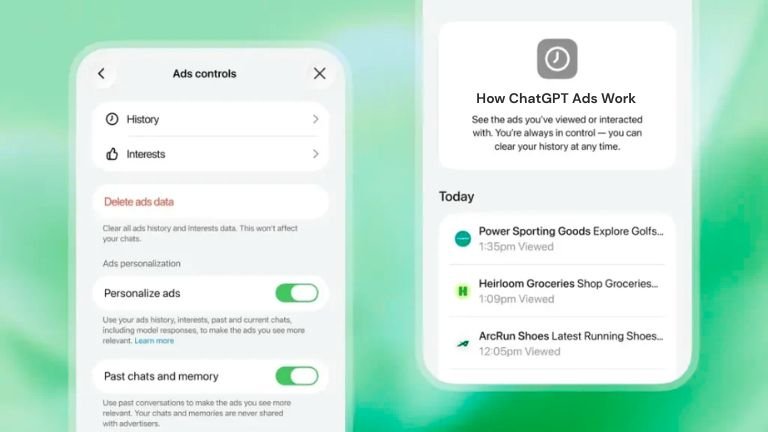
Ad controls and personalization settings
OpenAI is building ad controls in a way that feels closer to modern privacy settings than traditional ad platforms.
Instead of hiding settings behind confusing menus, ChatGPT’s ad system is expected to include visible options like:
- turning ad personalization on or off
- managing ad categories
- limiting ad frequency
- controlling data retention
This matters because different people have different comfort levels. Some users will accept personalization if it improves relevance. Others will want a more neutral experience.
This approach also aligns with privacy rules like GDPR and CCPA/CPRA, where transparency and user choice are not optional. They’re required.
Seeing why you’re being shown a particular ad
One of the most important trust features in any ad system is the ability to answer this question:
“Why am I seeing this?”
In ChatGPT, this matters even more because the experience feels personal. When you’re chatting with an AI, you’re not expecting ads. So if an ad appears, users need context.
A “why am I seeing this” option could explain things like:
- the ad matches the topic of your conversation
- the ad is being shown based on contextual relevance
- the ad is not based on personal identity or outside tracking
This kind of transparency supports ad transparency standards and helps reduce suspicion.
It also helps users understand that the system is matching intent, not spying on them.
Clearing ad data and managing retention
Data retention is a big deal, especially in the EU.
Users may want the ability to:
- clear ad-related data
- reset personalization
- remove stored signals
- control how long data is kept
This isn’t just about comfort. It’s also about compliance.
Regulations like GDPR require companies to justify how long they store data and why. Giving users control over retention is one of the simplest ways to stay aligned with those expectations.
Asking ChatGPT about an ad
This is one of the most interesting differences between ChatGPT ads and traditional ads. On Google or Meta, ads are one-way. You see them. You click or ignore them. That’s it. But in ChatGPT, users can do something new: They can ask questions about the ad.
For example:
- “Is this product actually good?”
- “What’s the difference between this and the competitor?”
- “Can you summarize what this service does?”
- “Is this a safe website?”
That turns ads into interactive experiences, which is a huge shift. It also creates pressure on advertisers. If your offer is weak or misleading, the user can immediately challenge it in the same interface.
That is one reason OpenAI is taking brand safety and scam prevention seriously.
Messaging an advertiser through an ad
Some ad experiences may allow users to interact with advertisers more directly.
This could include:
- opening a lead form
- clicking to message
- requesting a quote
- scheduling a demo
This is especially relevant for B2B, services, and lead generation campaigns.
But OpenAI will need to be careful here. Direct messaging creates risks around spam, fraud, and unsafe behavior. So if this feature expands, it will likely come with strong controls and verification requirements.
Policies, Exclusions, and Trust Standards
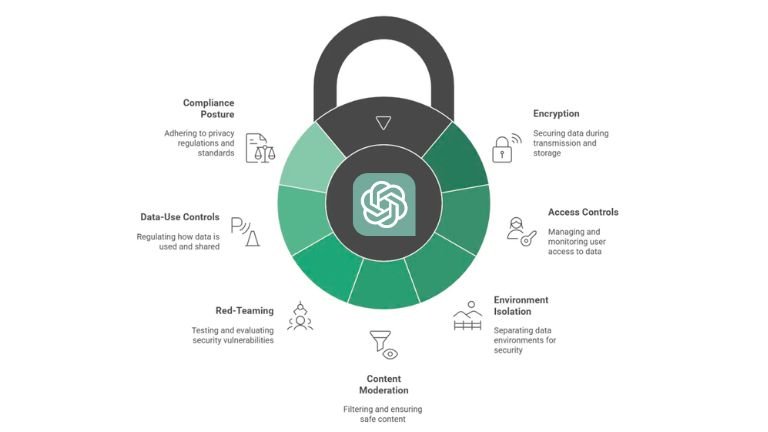
When ads enter a high-trust environment like ChatGPT, the rules have to be tighter than usual.
This isn’t a meme page. It isn’t a scroll-heavy social feed. People use ChatGPT to solve real problems, sometimes serious ones. That means advertising inside it needs clear boundaries.
If OpenAI gets this wrong, trust drops fast. If they get it right, How ChatGPT Ads Work becomes a sustainable model instead of a short-term experiment.
Let’s look at the guardrails.
Age-based ad eligibility
One of the clearest boundaries involves minors. Under laws like COPPA in the United States, platforms must take extra precautions when users are under 13. Other regions like the EU, UK, Canada, and Australia also have protections for young users.
Because of this, ChatGPT ads are not designed to target minors. In fact, early signals suggest that ads are not shown to accounts identified as under 18.
This is important for two reasons:
- It reduces legal risk.
- It protects vulnerable users.
If someone is using ChatGPT for schoolwork or general curiosity, especially as a minor, they should not be exposed to aggressive commercial messaging. Age-based eligibility is one of the first filters in the ad system.
No ads in sensitive or regulated contexts
Another major rule is about sensitive topics. ChatGPT is used for conversations about:
- health symptoms
- mental health
- legal issues
- financial emergencies
- personal crises
Showing ads inside those discussions would feel exploitative.
So OpenAI is expected to block ads in what are considered sensitive topics. That includes areas like:
- medical conditions
- mental health discussions
- certain financial hardship scenarios
- crisis-related conversations
This approach aligns with broader global regulation and also basic ethical standards.
When people ask, “Will ChatGPT show ads about health?” the answer appears to be: not in sensitive or regulated contexts. That separation protects the assistant’s credibility.
Restricted advertiser categories and vertical exclusions
Every major ad platform has restricted categories. Google, Meta, and Microsoft all limit or heavily regulate ads related to:
- gambling
- political persuasion
- adult content
- certain financial products
- weapons
ChatGPT ads will likely follow similar, if not stricter, rules.
For example:
- Political ads may face restrictions, especially in regions governed by DMA/DSA regulations in the EU.
- Certain financial products may require special approval.
- High-risk industries may be excluded entirely.
This reduces the risk of misinformation spreading through conversational AI. It also protects advertisers who do follow the rules, since low-quality or harmful ads won’t be competing for the same limited inventory.
Scam prevention and harmful ad protections
This may be the most critical part of the entire system. Conversational AI feels personal. So if a scam ad appears inside it, the damage is bigger than a random banner ad on a blog.
That’s why OpenAI must build strong:
- scam prevention systems
- harmful content filters
- advertiser verification processes
- fast reporting channels
Users need the ability to report misleading ads. Advertisers may need to pass approval checks before campaigns go live. Think about it like airport security.
You don’t notice it when it works well. But it’s the reason the whole system feels safe. In a world where online scams are rising, protection mechanisms are not optional. They are the foundation.
Trust standards are what separate ChatGPT ads from chaotic ad networks of the past. The system only works if users believe:
- ads are clearly labeled
- sensitive conversations are protected
- minors are not targeted
- harmful content is filtered
Without these protections, conversational advertising would collapse under public pressure.
How ChatGPT Ads Differ From Traditional Online Advertising
ChatGPT ads work differently from traditional digital ads because they appear inside a conversation, not alongside a feed or search results page.
Instead of relying heavily on keywords, browsing history, or audience profiles, the system is designed to prioritize the context and intent of the user’s question.
This section explains the key differences in targeting, timing, user trust, and how performance may be measured compared to platforms like Google and social media.
| Category | ChatGPT Ads | Traditional Online Ads (Google, Meta, Microsoft, TikTok, YouTube) |
| Core trigger | Conversational intent and prompt context (what the user is asking right now) | Keywords, interests, feeds, behaviors, and retargeting signals |
| Targeting style | Contextual targeting, semantic matching, intent detection | Behavioral targeting + keyword targeting + audience segments |
| Primary environment | High-trust, help-first conversation | Scroll-first feeds (Meta, TikTok), video-first platforms (YouTube), or search pages (Google, Bing) |
| Ad placement | Sponsored slot in a clearly separated area like “below the answer” or an “adjacent panel” | Search: top/bottom of SERP. Social/video: inserted between content. Display: across sites |
| Labeling | Strong labeling with clear ad transparency standards to protect trust | Labeling varies by platform and jurisdiction, often less noticeable in feeds |
| User experience | Designed to be non-intrusive and not disrupt the chat flow | Often interruptive (especially video and social), designed to stop the scroll |
| Funnel timing | Often shows during mid-to-lower funnel moments (problem-solving and decision-making) | Frequently top-of-funnel interruption, plus retargeting later |
| Relevance signal | The conversation itself: conversational intent, meaning, and context | User profile + behavior + keyword intent (in search) |
| Privacy posture | Privacy-by-design, limited user profiling, emphasis on what stays private | More reliance on tracking, cookies, device IDs, and cross-app signals (varies by platform) |
| Controls | Expected strong user controls (personalization settings, “why am I seeing this”, data retention options) | Controls exist but vary; often buried or limited depending on platform |
| Measurement focus | Likely more limits early: basic CTR, CPM, conversion actions, plus incrementality and lift testing | Mature measurement stacks: advanced attribution, audience breakdowns, modeled conversions, extensive reporting |
| Pricing expectation | Premium due to limited inventory, inventory limits, and frequency caps | Wider inventory → pricing can be cheaper, especially in social and display |
| Brand safety | High sensitivity: strict exclusions, restricted verticals, scam prevention focus | Brand safety varies; platforms have safeguards but also larger volumes and more variability |
| Big risk | Trust damage if relevance, transparency, or safety fails | Ad fatigue, privacy backlash, tracking limits, and creative burnout |
How to Buy Ads on ChatGP
Can you run ads on ChatGPT right now
Right now, the honest answer is: it depends.
ChatGPT ads are in a testing phase, which means access is limited. Most advertisers cannot just log in, create a campaign, and launch like they can on Google Ads or Meta Ads Manager. There isn’t a broad, open self-serve platform available to everyone yet.
So if you’re asking, “Can you buy ads on ChatGPT?” the practical answer is: not freely, not at scale, and not like a typical ad network. At this stage, access is controlled and usually tied to an early test program or partner route.
This limited access is intentional. OpenAI is protecting user experience, managing inventory limits, and learning what ad formats feel acceptable in a high-trust conversational product.
How to get access to ChatGPT ads
If you want access, there are only a few realistic paths right now. Think of this like getting into a new nightclub before it opens to the public. You either get invited, get on the list, or go in with someone who already has access.
The early advertiser program and limited access
OpenAI’s early phase is designed like a closed beta. That means a limited number of advertisers are allowed in at a time, often with controlled budgets and strict review.
If you’re accepted into an early access program, expect:
- premium pricing models (often CPM-heavy)
- strict brand safety review
- limited placement inventory
- early reporting constraints
- limited targeting options compared to mature platforms
This is not a “test $50 and see what happens” environment. It’s more like a serious pilot.
Advertisers who get in early are usually expected to provide feedback, follow guidelines closely, and avoid spammy tactics.
Joining the OpenAI advertiser interest list
For most brands, the most realistic next step is joining a waitlist/interest list. This is essentially OpenAI’s way of collecting demand signals: who wants in, what vertical they’re in, and how serious they are.
If you join the interest list, you’ll want to be ready to answer things like:
- what you sell
- what region you want to target (example: United States, UK, EU)
- whether your category is sensitive or restricted
- what your budget range looks like
- what your conversion action is
This is also where regulatory issues matter. If OpenAI expands to new regions, rules like GDPR, CCPA/CPRA, and ad transparency standards will influence what’s allowed.
Working through agencies and enterprise partners
If you don’t have direct access, the fastest route may be through a partner. Large agencies and enterprise partners often get early opportunities in new ad ecosystems because they can:
- handle compliance and approvals
- manage higher budgets
- provide structured feedback
- reduce platform risk
This is called agency access or enterprise partner access.
If you’re a mid-size or large brand, working with an agency partner may get you into the program faster than applying alone. It also helps you avoid beginner mistakes that could get your campaigns rejected.
How to set up ChatGPT ads
If you do get access, campaign setup will likely look different than search and social. That’s because the foundation is conversational intent, not keyword lists or interest targeting.
Defining goals and conversion actions
The first step is picking the job you want the ad to do. Examples of conversion actions:
- demo request
- lead form submission
- purchase
- newsletter signup
- app install
- booking a call
This matters because it shapes everything: the creative, the landing page, and the measurement. If you skip this step, you’ll end up with vague ads that feel out of place in the conversation.
Selecting intent clusters and conversation themes
Instead of keywords, you’ll likely choose themes that map to conversational questions.
Think of intent clusters like:
- “best tools for…”
- “alternatives to…”
- “pricing comparison…”
- “how to choose…”
- “recommend a…”
These clusters align with what people naturally ask ChatGPT. This is where semantic matching, intent detection, and conversational intent become your real targeting framework.
Budgeting for premium, limited inventory
Because of limited inventory and early-stage access, you should expect premium pricing. Even if OpenAI eventually offers CPC or CPA models, early systems often start with premium CPM because it’s simpler to manage limited placements. That means you should plan around:
- higher CPM than typical display ads
- uncertainty in early CPC or CVR benchmarks
- careful CAC and LTV modeling
- a budget that supports learning, not just winning
In a new channel, your first goal is often insight, not immediate ROAS perfection.
Building a testing plan for creative and offers
A testing plan keeps you from wasting money. Your first test should include:
- 2–4 creative angles
- 2–3 offers (or at least 2 value props)
- 2 landing page variants
- clean conversion tracking
Because ChatGPT ads are usefulness-driven, you want to learn:
- which message feels genuinely helpful
- which promise matches intent best
- which landing page reduces friction fastest
This is also where measurement may feel limited. So pair standard metrics like CTR and CVR with smarter evaluation methods like incrementality testing and lift.
How to make ads with ChatGPT
This is where things get fun. Because ChatGPT isn’t just the platform where ads appear. It can also be the tool you use to create the ads in the first place.
So when people search “how to make ads with chatgpt”, they’re usually asking one of two things:
- How do I create ad creative for ChatGPT ads?
- How do I use ChatGPT to write ads for other platforms like Google, Meta, TikTok, or YouTube?
We’re going to focus on the first one, but I’ll cover both briefly because marketers care about both.
Writing conversational ad copy variations
Conversational ad copy is different from traditional ad copy. Search ads are short and punchy. Social ads are emotional and scroll-stopping.
But ChatGPT ads should feel like:
- helpful
- calm
- clear
- relevant
- not salesy
Think of it like the difference between a street vendor yelling at you and a store clerk politely helping you find the right aisle.
A strong ChatGPT ad headline might look like:
- “Compare the best project management tools for remote teams”
- “A simple accounting tool for freelancers (no spreadsheets needed)”
- “Affordable CRM built for small B2B teams”
Notice what’s missing?
No hype. No shouting. No “LIMITED TIME ONLY!!!” Because in a trust environment, hype feels suspicious. When you use ChatGPT to generate ad copy, you should ask it for multiple versions based on intent clusters, such as:
- “recommendation intent”
- “comparison intent”
- “pricing intent”
- “beginner intent”
That helps you build a creative library without sounding robotic.
Creating offer-aligned messaging for likely prompts
This is the secret sauce. In ChatGPT advertising, the best creative doesn’t start with “what do we want to say?”
It starts with: What is the user likely asking right now? That’s why intent mapping is so important.
For example, if your product is an email marketing platform, users might ask:
- “What’s the best email tool for Shopify?”
- “How do I automate abandoned cart emails?”
- “What’s cheaper than Klaviyo?”
Your ad needs to match those conversations.This is offer alignment.
A weak offer says:
- “Try our platform today.”
A strong offer says:
- “Automate abandoned cart emails in 10 minutes.”
That matches intent. And because ChatGPT ads rely on semantic matching and intent detection, aligned messaging increases your chances of being selected into the sponsored slot.
Generating landing page copy, FAQs, and objection handling
In ChatGPT, the user is already informed. They’re not clicking blindly like they might from a banner ad. They’re clicking after reading an answer, thinking, comparing, and narrowing down.
That means your landing page needs to match a smarter visitor.
This is where ChatGPT becomes useful as a writing assistant.
You can use it to generate:
- landing page hero copy that matches conversational intent
- benefit sections written in plain English
- comparison tables
- objection-handling sections
- FAQ blocks
And FAQ blocks matter a lot here.
Because ChatGPT users click with questions already in mind. Your landing page should answer them fast.
Examples of high-value landing page FAQs:
- “Does this integrate with Shopify?”
- “How long does setup take?”
- “Is there a free trial?”
- “Can I cancel anytime?”
- “Is this GDPR compliant?”
These reduce friction and improve CVR (conversion rate).
Brand safety and compliance review workflows
This part is boring, but it’s critical. ChatGPT ads will likely require stronger compliance than many other platforms because of:
- high trust environment
- strict policy exclusions
- sensitive topic filtering
- scam prevention systems
So before you launch, you need a simple internal workflow:
- review claims (no exaggeration, no medical promises, no misleading pricing)
- review category eligibility (avoid restricted verticals)
- confirm landing page matches ad message
- confirm tracking and reporting setup
- confirm privacy compliance (GDPR, CCPA/CPRA)
If your ads are rejected, it’s usually not because OpenAI hates your brand. It’s because your messaging doesn’t meet the trust standard.
Think of it like getting into a fancy restaurant with a dress code. You don’t argue with the bouncer. You change the shoes.
Launch and optimization for ChatGPT Ads
Launching ChatGPT ads is not like launching a normal paid campaign.
On Google or Meta, you can often brute-force performance by increasing budget, expanding targeting, and letting the algorithm “figure it out.” Even if your creative is mediocre, you can sometimes win with scale.
ChatGPT is different.
Because the entire system is built around trust, usefulness, and context. If your ad feels spammy, it won’t just perform poorly. It may not even get shown much in the first place.
This is why launch and optimization are a core part of understanding how ChatGPT Ads Work in the real world.
Monitoring relevance and feedback signals
In a conversational ad environment, relevance is everything.
So instead of obsessing only over CPM or CTR, you also need to pay attention to signals that indicate whether the ad actually fits the moment.
Some of the most important feedback signals include:
- dismiss rate (users hiding or skipping ads)
- report rate (users flagging ads as misleading or unsafe)
- engagement quality (clicks that stay on the landing page vs bouncing)
- conversion intent signals (demo starts, form completion, checkout steps)
This is where negative feedback becomes a real performance metric.
On most platforms, negative feedback exists, but it’s often hidden. In ChatGPT, it may play a much larger role because OpenAI is trying to protect user experience aggressively.
In simple terms: if users consistently say your ad isn’t helpful, the system will stop rewarding you.
Iterating creative for higher usefulness
In ChatGPT, creative is not about being flashy.
It’s about being useful.
That means your creative testing should focus on:
- clarity
- relevance
- honest value
- direct answers to likely prompts
- matching conversational tone
A strong optimization approach is to test variations based on intent, such as:
- “comparison” copy (best alternative, side-by-side)
- “beginner” copy (simple setup, no jargon)
- “pricing” copy (transparent costs, no hidden fees)
- “problem-solving” copy (fix a pain point fast)
If you’ve ever optimized for SEO, this will feel familiar. It’s like writing content for humans first, not algorithms.
And since ChatGPT ads are based on semantic matching, your wording matters. Not for keyword stuffing, but for meaning.
Managing exclusions, sensitive contexts, and trust safeguards
ChatGPT ads come with stricter rules than most platforms.
So optimization isn’t only about performance. It’s also about staying compliant.
This includes:
- avoiding restricted verticals
- preventing ads from showing near sensitive topics
- ensuring landing pages don’t include misleading claims
- maintaining strong brand safety posture
For example, if your product is related to health supplements, financial services, or political content, you may face heavy restrictions or total exclusion.
Even for normal industries, you should expect that OpenAI will prioritize:
- scam prevention
- harmful content filtering
- advertiser verification
- transparency requirements
In practice, that means you may need to adjust your messaging to be more conservative than what you’d run on TikTok or Meta.
ChatGPT is not a “hype platform.” It’s a “trust platform.”
Scaling what works while protecting user experience
Scaling is where most ad platforms break down.
Because once advertisers find something that works, they often push it too hard. They flood inventory, expand targeting, and overexpose the audience.
OpenAI cannot allow that.
So scaling in ChatGPT ads will likely be controlled by:
- frequency caps
- limited sponsored slots
- inventory limits
- policy guardrails
- strict relevance scoring
That means advertisers will scale more slowly than they’re used to.
But the upside is quality. If the ecosystem stays clean, the user experience stays strong. And if the user experience stays strong, ads stay effective. This is the tradeoff OpenAI is betting on.
Frequently Asked Questions About ChatGPT Ads
How will ChatGPT ads work for users during the test phase?
ChatGPT ads appear in a clearly labeled sponsored area, usually below the answer. They are shown to a limited group of users during testing and do not affect the AI’s response.
Where are ChatGPT ads placed?
ChatGPT ads are placed in a separate sponsored slot, typically below the AI response or in an adjacent panel. They are visually separated from the main answer.
Do ads influence ChatGPT answers?
No. Ads do not influence ChatGPT answers. The AI response is generated independently from advertising content.
Who sees ChatGPT ads and which plans are ad-free?
Ads are primarily shown to Free-tier users during testing. Paid plans like ChatGPT Plus, Team, and Enterprise are ad-free.
Can users opt out of ChatGPT ads without paying?
Users may control ad personalization settings, but full ad removal typically requires upgrading to a paid plan.
How does ChatGPT choose which ad to show?
ChatGPT selects ads based on conversational intent and context, not personal browsing history. It uses semantic matching to align ads with the user’s current question.
What data do advertisers receive from OpenAI?
Advertisers receive aggregated reporting such as impressions, CTR, and conversions. They do not receive personal chat conversations or identifiable user data.
Are ChatGPT ads shown to minors?
No. Ads are not shown to users identified as minors.
Will ads appear in sensitive topics like health or politics?
No. Ads are restricted in sensitive or regulated topics such as health, mental health, and political content.
How many ads appear per response?
Typically one or none. Inventory is limited and frequency is controlled.
Is there a self-serve platform to buy ads on ChatGPT?
Not widely available yet. Access is currently limited to early programs, waitlists, or partner arrangements.

