 Skip to content

ChatGPT ads are officially in production, and the attention around them is easy to understand.
When a platform becomes part of how people research products, compare options, and make decisions, advertising usually follows.
But what’s actually in store with ChatGPT ads?
To answer that, it helps to understand how behavior has already changed.
People no longer search the way they used to. Instead of typing short phrases into a search box, they ask full questions. They compare options. They pressure-test decisions.
They want help thinking, not just a list of links.
ChatGPT has become part of that process.
Advertising on ChatGPT is not fully open yet, but the shape of the platform already makes one thing clear: this will not behave like traditional ad channels.
Brands that wait for a public launch will not be safer. They will be later, facing higher costs, and learning under pressure.
The real advantage right now is not early spend. It’s understanding the environment before competition increases.
This guide explains what ChatGPT advertising really is, where it stands today, what will and will not work, who it’s actually for, and how experienced advertisers should prepare so they are ready when access expands.
What is ChatGPT advertising?
ChatGPT advertising is not a traffic channel. It is a decision-support channel.
That distinction changes everything.
OpenAI is preparing to monetize its free user base by placing sponsored placements inside ChatGPT.
While broad access still appears limited, multiple reports and industry coverage point to a rollout expected around February 2026, with long-term revenue projections reaching roughly $25 billion by 2029.
Instead of interrupting people while they browse or scroll, these placements show up inside conversations where users are actively trying to figure something out.
They may be comparing products, evaluating services, or deciding what to do next.
In practical terms:
- Ads appear inside conversational experiences
- Ads are clearly labeled and visually separated from responses
- Ads are triggered by relevance to the user’s question
- Advertisers do not influence the answers ChatGPT provides
User control and trust are central to the design:
- Users can dismiss ads
- Personalization is controlled by the user
- Conversation data is not sold to advertisers
This structure creates a very different environment from traditional platforms.
A simple comparison helps explain the shift:
- Google Ads respond to keyword intent
- Meta Ads interrupt based on inferred interests
- ChatGPT Ads align with problem-driven intent inside a conversation
In this setting, aggressive promotion works against you. The ads that perform will be the ones that help users think clearly and move forward with confidence.
Where Is ChatGPT Advertising Now?
ChatGPT advertising is still in development and rolling out in a tightly controlled way.
As of January 2026, OpenAI has begun early-stage testing of advertising on ChatGPT with a very small group of advertisers.
Access is limited, and participation reportedly requires significant upfront spending commitments, estimated at around $1 million. This signals that the platform is prioritizing quality control and learning over rapid scale.
Ads are expected to be clearly labeled and kept separate from ChatGPT’s responses, with privacy protections built into how targeting and personalization work.
Rather than opening the platform broadly, OpenAI appears to be testing where ads appear inside conversations, how relevance is measured, and how ads affect the overall user experience.
What remains unclear are the exact timelines for wider access, final pricing models, auction mechanics, and how much inventory will ultimately be available. Those details are still evolving.
For experienced advertisers, this kind of rollout is usually a positive signal. Limited access often means higher intent, stricter standards, and stronger filtering of weak offers or unclear funnels.
A slower launch also suggests the platform is focused on protecting long-term user trust instead of rushing to monetize.
That’s not a delay problem. It’s a quality signal.
This section will be updated as OpenAI releases more confirmed details.
What will ads look like on ChatGPT?
Based on how OpenAI has described its advertising approach and early mockups shared publicly, ChatGPT ads are expected to appear at the bottom of a conversation after a user asks a question.
Instead of interrupting the response, the ad sits as a clearly labeled, optional suggestion tied to what the user is trying to accomplish.

The most important difference is what happens after the click. In this format, a user doesn’t just land on a page. They can continue the conversation directly with the advertising brand.
For example, someone asking about planning a trip could click an ad and immediately start a back-and-forth with a hotel or travel company about dates, budget, and options.
The ad becomes the entry point to a guided conversation, not a one-way pitch.
That shift changes what works. Generic copy, brand-first messaging, thin landing pages, or offers that push a sale too early break the flow and create friction.
The ads that perform will feel like a helpful next step: comparisons, clear explanations, and guidance that matches the user’s intent.
In short, the ad isn’t the pitch. It’s the bridge between a question and a decision.
How to Advertise on ChatGPT?
Advertising on ChatGPT won’t start with a simple signup form or a quick campaign launch. The platform is still evolving, and early access will favor advertisers who are prepared, not those looking for shortcuts.
What matters right now is readiness.
Advertisers should expect:
- Controlled access, with limited entry rather than open enrollment
- Category and industry restrictions, especially for sensitive or regulated sectors
- High relevance standards, where ads may not show at all if they don’t closely match the conversation
- Creative expectations focused on usefulness, not promotion or brand messaging
- Limited early measurement and attribution, with fewer performance signals than mature ad platforms
Early campaigns will be designed for learning, not scale. The goal will be to understand how conversations convert, not to drive volume immediately.
That learning will be less expensive for brands that already know their audience, have clear offers, and operate with defined funnels.
For advertisers still figuring those fundamentals out, the cost won’t just be higher spend. It will be slower progress and more wasted tests.
How Much Will ChatGPT Ads Cost?
Cost is the most debated part of ChatGPT advertising, and early signals suggest it will behave very differently from traditional search-style ad channels.
Current reporting points to an impression-based pricing model at launch, not pay-per-click. In other words, advertisers would pay when an ad is shown, not when someone clicks.
Numbers discussed in early coverage often land around a premium CPM range compared to platforms like Meta, though exact pricing has not been formally confirmed.
Why this matters:
First, impression-based pricing shifts more risk to the advertiser. You’re paying for exposure, not action. If your message, offer, or landing experience isn’t strong, spend can disappear quickly without producing qualified leads.
Second, early-stage reporting is expected to be limited. Initial metrics may focus on basic signals like views and clicks, not the deeper attribution advertisers are used to. That slows optimization and puts more pressure on fundamentals like relevance, clarity, and conversion flow.
The bigger takeaway is this: fixed numbers matter less than how cost behaves in a high-intent environment.
With limited inventory and strict relevance standards, pricing will reflect intent quality, not volume. Cheap reach is unlikely. Efficient outcomes are.
How pricing, reporting, and rollout could shape results
| Early signal | What it likely means | What to do about it |
|---|---|---|
| Pricing may start impression-based (CPM) | You pay for exposure, not action | Tight relevance + strong offer + clean landing flow |
| Premium CPM ranges discussed in early coverage | Higher cost per test vs mature platforms | Plan fewer tests, make each one high quality |
| Limited early reporting (views/clicks first) | Slower optimization cycles | Define lead quality and track downstream outcomes |
| Controlled rollout with select advertisers | Limited inventory + stricter standards | Expect higher relevance thresholds; weak ads may not show |
| Ads labeled and separated from responses | Less “interruptive” inventory | Be the best next step, not the loudest message |
| Category and age restrictions | Some verticals have less access | Confirm eligibility early; don’t assume broad availability |
Who can absorb early costs and who may struggle
| Business type | Early cost pressure | Why it matters | Best angle to lead with |
|---|---|---|---|
| Low-AOV ecommerce | High | Margins get squeezed fast under CPM | Comparisons, bundles, clear differentiation |
| Real estate | Medium | High deal value can justify higher acquisition cost | Budget + location pages, rent vs buy flows |
| Consulting / services | Medium | Deal size supports premium leads | Proof, assessments, strong next step |
| Local services | High | Lead value varies; close rates decide ROI | Track call quality, qualify hard, focus on urgency |
How Will ChatGPT Ad Auctions Work?
OpenAI hasn’t published full auction mechanics yet, so there isn’t a reliable “step-by-step” playbook. What we can do is map the likely direction based on signals from how the platform is being built.
For example, OpenAI’s job listings and platform signals suggest the ad system is being designed with familiar ad infrastructure in mind, including integrations that look similar to how major ad ecosystems handle delivery and measurement.
More importantly, expect relevance to function like a gate before bidding even matters. In other words, if your ad does not match the conversation, it may not show at all, no matter how much you bid.
That lines up with how early placements are being described (contextual, optional, and designed not to disrupt the experience) and it also matches OpenAI’s broader focus on protecting user trust.
In fact, OpenAI’s approach to ad safety and user protections has been reported to include restrictions around sensitive topics and minors, which strongly implies the platform will prioritize experience before monetization.
You should also expect early reporting to be limited, which changes how advertisers optimize.
According to early reporting on ChatGPT ad testing, initial performance data may skew toward high-level metrics like views and clicks rather than the deep conversion reporting marketers are used to on mature platforms.
If that holds, early auction “optimization” will be less about aggressive bidding and more about tightening message-to-intent match, improving landing page alignment, and testing creative that answers the user’s next question.
Who should advertise on ChatGPT?
ChatGPT advertising will not be a universal fit, especially in its early stages.
The businesses most likely to benefit are those whose customers already use conversational tools as part of their research and decision-making process.
Usage data supports this. Recent analysis shows that 54–57% of ChatGPT users fall between the ages of 18 and 34, a group that increasingly relies on conversational platforms to compare options, validate choices, and move toward decisions rather than browse passively.
You can see a full breakdown of adoption trends and demographics in this overview of ChatGPT usage statistics.
That makes ChatGPT advertising a strong early fit for businesses that benefit from intent-driven conversations rather than high-volume clicks.
Industries Best Positioned for Early ChatGPT Advertising
These industries tend to win because customers compare options and ask detailed questions before buying.
| Industry | Best fit when | Why it fits | Examples | What to have ready | Watch-outs |
|---|---|---|---|---|---|
| High-LTV ecommerce & premium retail | AOV is high, repeats are common, buyers compare | People ask “best for my situation” questions before buying | Mattresses, skincare devices, fitness equipment, specialty supplements, premium apparel, home office gear | Comparison pages, “X vs Y” pages, returns/warranty clarity, reviews, strong PDPs | Low margins + broad targeting can break economics early |
| Real estate (residential + commercial) | Leads are high value, sales team can handle intent-heavy inquiries | Users naturally ask scenario questions (rent vs buy, neighborhoods, commute, budget tradeoffs) | Residential buyers/sellers, investor leads, commercial leasing | Local guides, financing FAQs, “best areas for X”, clear scheduling, fast follow-up | Slow follow-up makes it feel expensive |
| Professional services (legal, accounting, consulting, agencies) | Offer is defined and there’s a clear first step | Conversation format matches diagnosis + next steps | Law firms, CPA firms, consulting, agencies | Outcome-based service pages, proof/case examples, qualifying intake forms, tight follow-up | “We do everything” positioning gets filtered by relevance |
| Coaching, training, high-ticket education | Offer solves a specific problem with a clear path | Users ask detailed “what should I do” questions | Career switch coaching, leadership training, exam prep, exec coaching | Program comparisons, outcomes, FAQs, sample lessons, clear eligibility | Vague claims or weak proof underperform |
| Premium local services (high intent, high lead value) | Leads are valuable and urgency is common | Best leads come from high-stakes needs | Cosmetic dentistry, LASIK, high-end remodelers, HVAC replacement, specialty clinics, private practices | Service-area pages, pricing ranges, booking flow, reviews, “what to expect” content | Low-margin services struggle unless close rate is strong |
| B2B SaaS & subscriptions | Product is researched and approved (not impulsive) | Buyers ask evaluation questions and compare vendors | CRM, analytics, project management, IT/security tools | Comparisons, security/compliance pages, integrations, onboarding clarity, demo flow | Messy funnel or unclear segment reduces relevance fast |
| Travel, hospitality, experiences | You sell planning-heavy trips/stays/experiences | People plan in conversations (budgets, timing, itineraries) | Hotels, tours, retreats, destination experiences | Itinerary builders, seasonal guides, flexible booking info, clear next steps | Generic offers lose to more specific, helpful positioning |
| Finance & insurance (cautious fit) | Offer is compliant, high value, and educational | Users ask “which is right for me” questions | Insurance comparisons, retirement planning, tax planning | Compliance-safe content, disclaimers, strong lead qualification | Sensitive-topic restrictions and stricter review can limit scale |
Industries That Should Wait Before Advertising on ChatGPT
These models usually struggle early due to thin margins, weak differentiation, or poor follow-up.
| Industry / Model | Why it’s a poor early fit | What would need to change to become a fit |
|---|---|---|
| Arbitrage + thin affiliate plays | Depends on cheap clicks and thin pages; relevance filters likely stricter | Stronger value prop, real content depth, better on-site experience |
| Dropshipping + low differentiation retail | Weak trust signals and copycat offers don’t earn confidence | Differentiation, proof, policies, reviews, brand credibility |
| Low-margin local services (weak follow-up) | Tight economics + slow response makes leads unprofitable | Faster response, better intake, higher LTV services, higher close rate |
| Weak sales processes (any industry) | You’ll pay for demand you can’t convert | Qualification, speed-to-lead, scripts, tracking, sales ops discipline |
Is ChatGPT advertising worth it?
It can be, but it depends on who you’re talking about.
Right now, the early version of ChatGPT advertising appears to favor bigger businesses and enterprises.
Reports suggest OpenAI is aiming for an impression-based model around $60 per 1,000 impressions and that early access may require roughly a $1 million minimum commitment.
That combination makes it a tough fit for most small businesses, especially if they rely on low margins or need immediate, trackable leads.
For companies that can afford that level of testing, it can be a strong early-mover play. With less competition, you’re buying learning as much as you’re buying exposure.
You get to see what “relevance” really means in this environment, what kind of messaging gets traction, and how well conversational placements drive qualified demand before the channel gets crowded.
So the bottom line is simple: if you have the budget and a high-value offer, testing early can be worth it.
If you don’t, the smarter move is to prepare now and enter later with a stronger funnel, clearer positioning, and less wasted spend.
How can I appear on ChatGPT without advertising?
You don’t have to wait for ads to start getting visibility in ChatGPT.
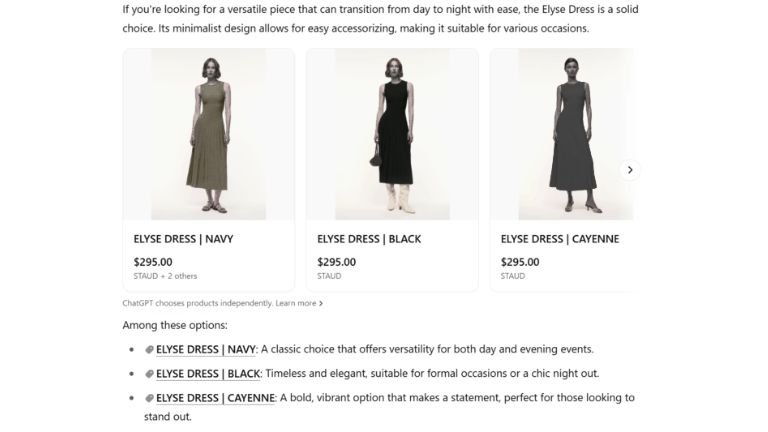
ChatGPT already pulls in brands and links to sources as part of its answers. That means users can discover your business while they’re researching, comparing options, or trying to decide what to do next.
When your site (or your brand) shows up in those citations, you can earn clicks that look a lot like “high-intent” traffic: people reading a guide, checking pricing, looking at products, or booking a call.
Getting featured comes down to giving ChatGPT strong, reliable places to reference. That usually means:
- Clear, useful content that answers real questions (not fluff or sales copy)
- Well-structured pages that are easy to scan and understand
- Specific details like comparisons, tables, FAQs, and step-by-step guidance
- Third-party mentions on trusted sites, directories, and review platforms
How to Prepare for ChatGPT Advertising Before It’s Widely Available
Preparation focuses on fundamentals.
Readiness checklist:
- Content that supports buyer questions
- Clear funnels from problem to solution
- Conversion tracking that reflects real outcomes
- Sales processes aligned with intent-driven leads
- Testing adjacent platforms that emphasize intent
Brands that do this work now will not scramble later.
Final Thoughts
ChatGPT advertising will not reward experimentation for its own sake.
It will reward businesses that understand their customers, offers, and decision paths. Preparation reduces wasted spend, failed tests, and false assumptions.
The brands that succeed will not be the first to spend. They will be the first to be ready.
If you want to explore ChatGPT advertising from a preparation-first perspective, focus on clarity before cost and relevance before reach.

